
The Anarchist Tool Chest PDF: A Comprehensive Guide
Discover a detailed resource outlining Schwarz’s system, offering plans, tool lists, and sharpening guides for a self-sufficient woodworking journey, available digitally.
The Anarchist Tool Chest, conceived by Christopher Schwarz, represents a paradigm shift in woodworking, advocating for a return to hand tools and a curated, portable workshop. This isn’t about rejecting power tools entirely, but prioritizing independence from complex systems and electricity. The core idea revolves around a robust, wooden chest containing only essential tools – a carefully selected collection capable of tackling a wide range of projects.
The accompanying PDF serves as a comprehensive guide, detailing this philosophy and providing practical instructions for building your own chest and assembling a functional toolset. It’s a movement towards mindful craftsmanship and self-reliance.
What is the “Anarchist Tool Chest” Philosophy?
The “Anarchist Tool Chest” philosophy, as detailed in the PDF, champions a liberation from the constraints of modern, often expensive, tool systems. It’s about building a workshop that isn’t tied to electrical outlets or reliant on a vast array of specialized machinery. Schwarz advocates for a focused collection of high-quality hand tools, chosen for their versatility and longevity.
This approach fosters self-sufficiency, encourages deeper engagement with the craft, and promotes a more sustainable woodworking practice, all documented within the comprehensive PDF resource.

Understanding the Core Principles
Explore the PDF’s emphasis on simplicity, rejecting reliance on power tools, and embracing traditional craftsmanship for a focused, self-reliant woodworking experience.
Simplicity and Self-Sufficiency in Tool Ownership
The Anarchist Tool Chest PDF champions a minimalist approach, advocating for fewer, high-quality hand tools over a vast collection of specialized power tools. This philosophy promotes self-reliance, enabling woodworkers to complete projects without dependence on electricity or complex systems.
Schwarz’s system, detailed within the PDF, prioritizes understanding each tool’s capabilities and mastering fundamental techniques. It’s about building a versatile kit capable of tackling diverse tasks, fostering independence and a deeper connection to the craft. The PDF guides users toward intentional tool acquisition, avoiding unnecessary purchases.
The Rejection of Modern Tool Systems
The Anarchist Tool Chest PDF presents a deliberate departure from the modern reliance on power tools and complex, often disposable, tool systems. It critiques the trend of specialized tools designed for single tasks, advocating instead for versatile hand tools capable of multiple functions.
Schwarz argues this dependence creates vulnerability and hinders true craftsmanship. The PDF details how a carefully curated collection of hand tools offers greater control, portability, and longevity, freeing woodworkers from the constraints of electricity and manufacturer dependencies.
Focus on Hand Tools and Traditional Craftsmanship
The Anarchist Tool Chest PDF champions a return to traditional woodworking techniques, emphasizing the skills and knowledge passed down through generations. It’s a celebration of hand tool proficiency – sawing, planing, chiseling – as the core of quality craftsmanship.
This approach fosters a deeper connection to the material and the process, promoting mindful making and lasting results. The PDF isn’t simply about tools; it’s about cultivating a skillset and a philosophy centered on self-reliance and enduring quality.
The Tool Chest Design & Construction
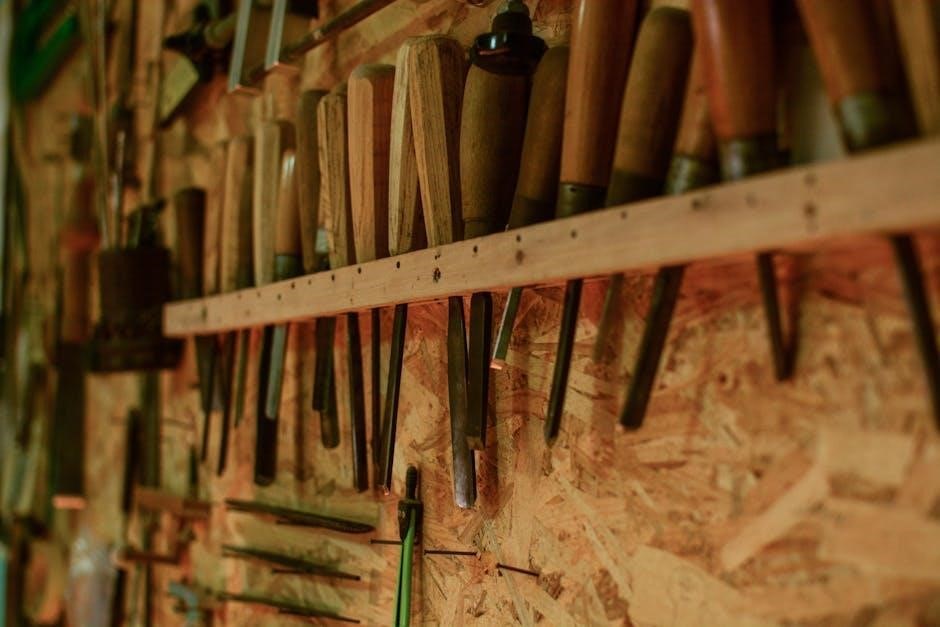
Explore detailed plans and diagrams within the PDF, guiding you through building a robust, portable, and customizable tool chest for efficient workshop organization.
Dimensions and Materials of the Chest
The PDF meticulously details the chest’s dimensions, typically around 36” long, 18” wide, and 12” high, offering a practical size for portability and ample tool storage. Construction commonly utilizes ¾” thick stock, favoring durable hardwoods like poplar, beech, or even readily available softwoods.
Schwarz advocates for robust joinery – dovetails are preferred – ensuring longevity and structural integrity. The plans within the PDF provide precise measurements and cutting lists, simplifying material acquisition and construction. Considerations for handle placement and lid design are also thoroughly addressed, promoting ease of use and accessibility.
Building Your Own Anarchist Tool Chest: A Step-by-Step Overview
The PDF guides builders through each stage, beginning with milling lumber and cutting precise joinery – primarily dovetails – for the chest’s robust construction. Detailed diagrams illustrate assembly, emphasizing squareness and glue-up techniques.
Subsequent steps cover lid construction, handle attachment, and the addition of a tillable tray for smaller tools. The resource stresses careful fitting and finishing, promoting a durable and aesthetically pleasing result. Clear instructions empower woodworkers of varying skill levels to successfully build their own tool chest.
Customization Options for the Tool Chest
The PDF doesn’t prescribe rigid conformity; it encourages personalization. Builders can adjust dimensions to suit their tool collection and workspace. Options include adding dividers, trays of varying depths, and specialized compartments for specific tools.
Further customization extends to exterior finishes – from traditional oil/wax blends to painted surfaces. The resource inspires adapting the chest’s aesthetic to individual preferences, while maintaining its core functionality and robust construction. It’s a platform for individual expression within a proven framework.

Essential Tools for the Anarchist Tool Chest
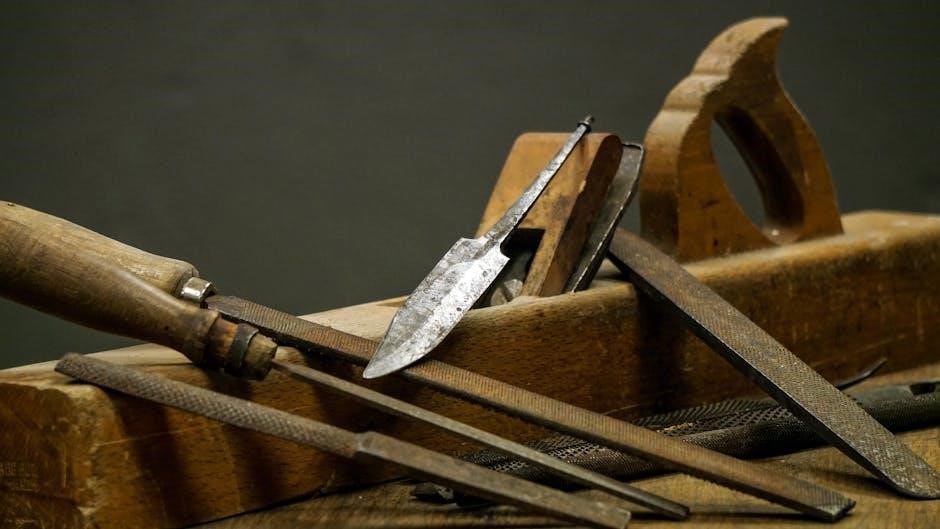
The PDF details hand saws, planes (smoothing, jack, fore), chisels, and precise measuring tools – foundational elements for traditional woodworking practices.
Hand Saws: Types and Selection
The Anarchist Tool Chest PDF meticulously covers various hand saw types crucial for any woodworker. It distinguishes between rip saws, designed for cutting with the grain, and crosscut saws, ideal for cutting against it.
Furthermore, the guide details backsaws – including dovetail and tenon saws – prized for their precision. Selecting the right saw involves considering tooth count (TPI), blade length, and handle comfort.
Schwarz’s philosophy emphasizes acquiring a few high-quality saws rather than a multitude of inferior ones, ensuring versatility and longevity within the tool chest system.
Planes: Smoothing, Jack, and Fore Planes
The Anarchist Tool Chest PDF dedicates significant attention to hand planes, outlining the essential roles of smoothing, jack, and fore planes. A jack plane serves as a versatile all-purpose tool for initial flattening and dimensioning wood.
Smoothing planes refine surfaces, leaving them ready for finishing, while fore planes tackle longer, slightly curved surfaces. The PDF details proper setup, sharpening, and tuning for each plane type.
Schwarz advocates for understanding the specific function of each plane, building a core set that minimizes the need for specialized, rarely-used alternatives.
Chisels: A Variety of Sizes and Uses
The Anarchist Tool Chest PDF emphasizes a curated selection of chisels, prioritizing versatility over an extensive collection. It details the importance of owning a range of sizes – from 1/4″ for delicate work to 1″ or larger for heavier tasks like joinery.
The guide covers chisel sharpening techniques, crucial for maintaining optimal performance. Different chisel types, including bench, paring, and skew chisels, are explained with their specific applications.
Schwarz stresses that quality chisels, properly maintained, are foundational for precise woodworking and long-term tool chest value.
Measuring and Marking Tools
The Anarchist Tool Chest PDF highlights essential measuring and marking tools for accurate woodworking. A solid combination square, marking gauge, and a reliable steel rule are deemed fundamental. The guide details how these tools facilitate precise layout work, crucial for successful joinery.
Emphasis is placed on understanding the proper use of each tool, ensuring accuracy and efficiency. The PDF likely includes guidance on maintaining these tools for longevity and consistent results.
Schwarz advocates for simplicity, suggesting a focused set over a vast, specialized collection.

Expanding Your Tool Collection
The PDF encourages gradual additions, prioritizing tools based on project needs; sourcing options include new, used, and vintage finds for budget-conscious woodworkers.
Adding Specialized Tools Over Time
The “Anarchist Tool Chest” philosophy doesn’t advocate for immediate, comprehensive acquisition. Instead, the PDF resource champions a deliberate, project-driven approach to expanding one’s toolset. Begin with the core essentials, mastering their use before considering specialized additions.
As woodworking projects evolve, identify specific tools that address new challenges; This prevents unnecessary spending and encourages a deeper understanding of each tool’s purpose. The PDF guides this process, suggesting tools based on common woodworking tasks and offering insights into their value within the broader system.
Sourcing Tools: New, Used, and Vintage Options
The “Anarchist Tool Chest” PDF doesn’t limit sourcing to a single avenue. It encourages exploration of new tools for guaranteed quality, but strongly advocates for used and vintage options. Flea markets, estate sales, and online auctions often yield high-quality hand tools at significantly reduced prices.
The PDF provides guidance on evaluating used tools for wear and damage, and offers restoration tips. Prioritizing functionality over pristine condition aligns with the philosophy of practicality and self-reliance, making tool acquisition accessible and sustainable.
Maintaining and Restoring Hand Tools
The “Anarchist Tool Chest” PDF emphasizes that tool ownership extends beyond acquisition; diligent maintenance is crucial. Detailed sharpening guides are included, covering various tools and techniques to achieve and maintain optimal cutting edges.
Restoration advice focuses on practical repairs, addressing rust, replacing handles, and ensuring tools function reliably. This proactive approach minimizes the need for replacements, aligning with the core principle of self-sufficiency and extending the lifespan of valuable woodworking implements.

The PDF Resource: What’s Included?
Explore detailed tool specifications, construction blueprints, and essential sharpening techniques—a complete guide to building and equipping your own “Anarchist Tool Chest.”
Detailed Tool Lists and Specifications
The PDF provides exhaustive lists detailing every tool within Christopher Schwarz’s chest, categorized for clarity and ease of sourcing. Beyond simple enumeration, it includes precise specifications – sizes, materials, and recommended manufacturers – for each item.
This isn’t merely a shopping list; it’s a curated selection emphasizing hand tools and traditional craftsmanship. The resource clarifies essential versus optional tools, guiding users in building a functional chest incrementally. Detailed descriptions help understand each tool’s purpose and proper usage, fostering self-sufficiency and informed purchasing decisions.
Construction Plans and Diagrams
Within the PDF, you’ll find comprehensive construction plans for building your own Anarchist Tool Chest. These aren’t just sketches; they are detailed diagrams with precise measurements, ensuring accuracy during assembly. The plans cover every aspect, from the chest’s overall dimensions to individual component construction.
Clear visual representations guide builders through each step, even those with limited woodworking experience. Supplementary diagrams illustrate joinery techniques and material usage, promoting a solid and durable build. These plans empower users to create a functional and aesthetically pleasing tool storage solution.
Sharpening Guides and Techniques
A crucial component of the PDF is its dedicated section on sharpening. Maintaining sharp tools is paramount to the Anarchist Tool Chest philosophy, and this guide provides detailed instructions. It covers sharpening various hand tools – chisels, planes, and saws – with clarity.
Techniques range from basic honing to more advanced methods, illustrated with diagrams. The guide details appropriate abrasives, angles, and procedures for achieving a razor-sharp edge. Mastering these skills ensures optimal tool performance and longevity, vital for any woodworker.
Community and Resources
Connect with fellow enthusiasts through online forums, workshops, and explore resources like The Woodwright’s Shop for shared knowledge and support.
Online Forums and Discussion Groups
Engage with a vibrant community of woodworkers dedicated to the Anarchist Tool Chest philosophy! Numerous online forums and discussion groups provide platforms for sharing experiences, asking questions, and showcasing projects. These spaces are invaluable for troubleshooting construction challenges, receiving tool maintenance advice, and discovering sourcing options for both new and vintage tools.
Members frequently exchange sharpening techniques, customization ideas for the tool chest itself, and offer support to those embarking on their hand tool journey. Active participation fosters learning and camaraderie within this dedicated woodworking network.
Woodworking Classes and Workshops
Enhance your skills through hands-on learning experiences! Many woodworking schools and workshops now offer courses specifically focused on hand tool techniques and the Anarchist Tool Chest approach. These immersive sessions provide personalized instruction on tool sharpening, chest construction, and traditional woodworking methods.
Workshops often cover joint-making, finishing techniques, and offer guidance on building a functional and personalized tool collection. Seek out classes led by experienced instructors passionate about promoting self-sufficiency in the workshop.
The Woodwright’s Shop Connection
Roy Underhill’s “The Woodwright’s Shop” profoundly influenced Christopher Schwarz and the Anarchist Tool Chest philosophy. The show champions traditional hand tool woodworking, emphasizing skill and craftsmanship over reliance on power tools.
Schwarz frequently acknowledges Underhill’s impact, and the principles demonstrated on “The Woodwright’s Shop” – like proper tool maintenance and efficient hand techniques – directly align with the chest’s core tenets. Streaming episodes on pbs.org offers valuable insights for aspiring woodworkers.

The Anarchist Tool Chest in Modern Woodworking
Embrace a back-to-basics approach; the tool chest offers hobbyists and professionals cost-effectiveness, long-term value, and relevance even in a power tool dominated world.
Relevance in a Power Tool World
Despite the prevalence of power tools, the Anarchist Tool Chest remains remarkably relevant. It champions a deliberate, thoughtful approach to woodworking, fostering a deeper connection with the craft. This system isn’t about rejecting power tools entirely, but prioritizing hand tools for control, portability, and quiet operation.
Schwarz’s philosophy encourages self-sufficiency and skill development, allowing woodworkers to create beautiful pieces without relying on electricity or complex machinery. It’s a refreshing alternative, appealing to those seeking a more tactile and mindful woodworking experience, proving its enduring value.
Benefits for Hobbyists and Professionals
For hobbyists, the Anarchist Tool Chest offers an accessible entry point into traditional woodworking, minimizing initial investment and maximizing learning. Professionals benefit from its portability and reliability – a compact, well-organized chest travels easily to job sites, unaffected by power outages.
The system promotes skill refinement and problem-solving, enhancing craftsmanship. It’s a cost-effective long-term solution, reducing reliance on expensive, easily-broken power tools, and fostering a sustainable woodworking practice for all skill levels.
Cost-Effectiveness and Long-Term Value
Investing in hand tools, as advocated by the Anarchist Tool Chest philosophy, often proves more economical than continually replacing power tools. While initial outlay might seem comparable, quality hand tools, properly maintained, last generations.
The PDF resource guides users toward sourcing affordable used and vintage tools, further reducing costs. This approach fosters self-reliance and minimizes dependence on manufacturers, delivering substantial long-term value and a sustainable woodworking practice.

Troubleshooting Common Issues
The PDF aids in resolving construction problems, tool maintenance, and locating replacement parts, ensuring a smooth journey towards woodworking independence and skill.
Tool Chest Construction Problems
Building an anarchist tool chest, while rewarding, can present challenges. The PDF resource addresses common issues like inaccurate cuts, leading to ill-fitting joints, and provides detailed diagrams for correction.
It also offers guidance on wood selection, preventing warping or cracking.
Troubleshooting squareness and stability are covered, alongside advice on reinforcing weak points.
Furthermore, the PDF details solutions for drawer construction difficulties, ensuring smooth operation and proper alignment.
Expect clear explanations and visual aids to overcome these hurdles.
Tool Maintenance Challenges
Maintaining hand tools requires dedication, and the PDF provides extensive guidance. Common challenges, like rust formation on saw blades and plane irons, are addressed with detailed sharpening techniques. The resource explains how to properly hone chisels and maintain the integrity of tool edges.
It also covers preventing and removing pitch buildup on planes, alongside advice on oiling and protecting tools from corrosion.
Expect step-by-step instructions and visual aids to ensure longevity and optimal performance of your cherished tools.
Finding Replacement Parts
Sourcing replacement parts for older hand tools can be tricky, but the PDF resource offers valuable guidance. It suggests exploring vintage tool dealers, online auction sites, and specialized woodworking supply stores. The document details identifying compatible parts and provides resources for locating specific components like blades, handles, and screws.
It also encourages networking within woodworking communities for leads and advice on restoration projects, ensuring your tool chest remains fully functional for years to come.
Where to Find the Anarchist Tool Chest PDF
Access the official PDF through Lost Art Press and reputable retailers; avoid pirated copies to support the author and receive complete, accurate content.
Official Sources and Retailers
For a legitimate copy of “The Anarchist Tool Chest” PDF, Lost Art Press is the primary official source. Their website provides direct access to the digital version, ensuring you receive the complete and unaltered content created by Christopher Schwarz.
Additionally, several reputable woodworking retailers also carry the PDF, including those specializing in hand tools and traditional woodworking resources. Checking these retailers guarantees authenticity and supports both the author and the woodworking community.
Be cautious of unofficial sources, as these may contain incomplete or compromised versions of the PDF.
Legitimate Download Options
Accessing “The Anarchist Tool Chest” PDF legally ensures a quality experience and supports the creator’s work. Lost Art Press offers a direct download upon purchase, providing immediate access to the comprehensive guide.
Authorized retailers often provide download links after a successful transaction, delivering the PDF directly to your email or account. These options guarantee a secure and complete file, free from malware or alterations.
Always verify the source before downloading to protect your device and ensure authenticity.
Avoiding Pirated Copies
Downloading “The Anarchist Tool Chest” PDF from unofficial sources carries significant risks. Pirated copies often contain malware, viruses, or incomplete files, compromising your device’s security and your woodworking experience.
Furthermore, obtaining the PDF illegally undermines the author’s livelihood and discourages the creation of valuable woodworking resources. Supporting legitimate channels ensures continued quality content.
Choose authorized retailers and the official Lost Art Press website for a safe, complete, and ethical purchase, protecting both yourself and the woodworking community.